
Acoustic panels are specialized sound-absorbing materials designed to reduce echo, control reverberation, and improve overall sound quality within indoor spaces. In Dubai’s rapidly evolving urban landscape, acoustic panel installation has become increasingly important as modern architecture favors open-plan designs with high ceilings and extensive glass surfaces, elements that often create acoustic challenges.
Common problems in untreated spaces include excessive echo, background noise interference, and poor speech clarity, all of which can significantly impact productivity, comfort, and communication. This comprehensive guide is designed for anyone seeking to improve their acoustic environment, whether you’re managing a corporate office, designing a home theater, running a restaurant, or building a professional recording studio in Dubai.
What Are Acoustic Panels?
Acoustic panels are sound-absorbing materials strategically installed on walls and ceilings to control sound reflections within a room. It’s important to understand that sound absorption differs from soundproofing, acoustic panels reduce echo and improve sound quality within a space, while soundproofing prevents sound from traveling between spaces.
Dubai installations commonly feature several panel types. Fabric-wrapped panels offer aesthetic versatility with excellent absorption properties, while wooden acoustic panels combine natural aesthetics with functional performance. PET felt panels provide an eco-friendly, moisture-resistant option ideal for Dubai’s climate. Ceiling baffles and clouds are suspended elements particularly effective in spaces with high ceilings, a common feature in Dubai’s commercial architecture.
Why Acoustic Panels Are Needed in Dubai (2026 Context)
Dubai’s commercial real estate sector continues expanding in 2026, with open-office concepts dominating workplace design. These environments, characterized by minimal physical barriers and collaborative spaces, create acoustic challenges that acoustic panels effectively address.
The city’s architectural preferences for high ceilings and glass-heavy interiors, while visually stunning, create hard reflective surfaces that amplify sound problems. Additionally, Dubai’s dense urban environment generates constant noise from traffic, and powerful HVAC systems necessary for climate control contribute to background noise levels.
Dubai’s building regulations increasingly emphasize acoustic comfort standards, recognizing that proper sound management contributes to occupant wellbeing and productivity, making acoustic treatment not just desirable but increasingly expected in quality developments.
Areas Where Acoustic Panels Are Commonly Installed
Offices and meeting rooms benefit tremendously from acoustic treatment, ensuring clear communication during important discussions and reducing distraction in open workspaces. Home theaters and living rooms achieve cinema-quality sound with proper panel installation, eliminating echo that muddles dialogue and music.
Recording studios and podcast rooms require precise acoustic control to produce professional-quality audio content. Restaurants, cafés, and hotels install acoustic panels to create comfortable dining atmospheres where conversations don’t compete with overwhelming background noise. Schools, universities, and training centers use acoustic treatment to ensure speech intelligibility, which is crucial for effective learning.
Pre-Installation Planning
Successful acoustic panel installation begins with thorough planning. An acoustic site inspection identifies specific noise problems, whether excessive reverberation, echo issues, or poor speech intelligibility. Understanding room dimensions and surface materials helps determine the appropriate amount and type of acoustic treatment needed.
Choosing the right panel type involves considering both acoustic performance and aesthetic requirements. Thickness, density, and material composition all affect absorption characteristics. The decision between wall-mounted and ceiling-mounted panels depends on the room’s geometry, usage patterns, and where sound reflections are most problematic.
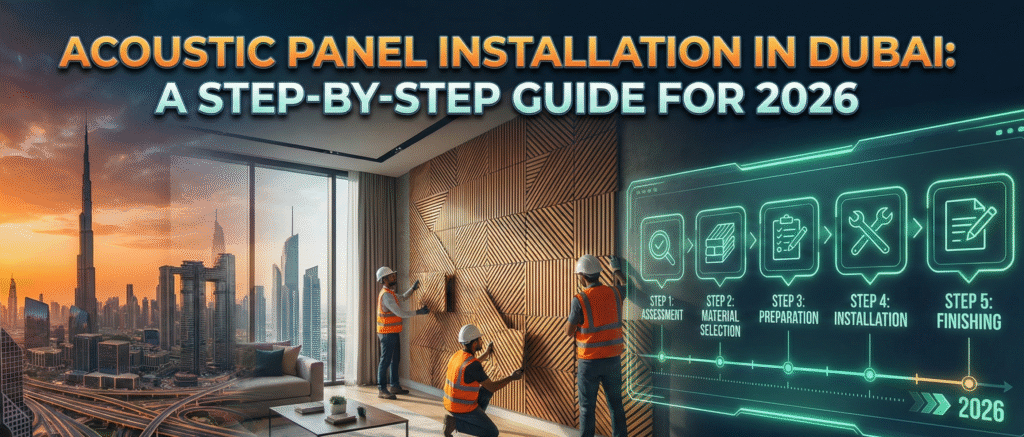
Step-by-Step Acoustic Panel Installation Process
Step 1: Acoustic Assessment
Professional installation begins with analyzing noise levels, understanding how the space will be used, and defining desired acoustic outcomes. This assessment ensures the treatment plan addresses actual problems rather than applying generic solutions.
Step 2: Panel Selection
Material selection considers the space’s functional requirements while matching interior design aesthetics. In Dubai’s climate, fire-rated and moisture-resistant options are particularly important, ensuring panels meet safety standards and maintain performance in air-conditioned environments with potential humidity fluctuations.
Step 3: Surface Preparation
Installation surfaces must be structurally sound, clean, and properly marked. This preparation phase includes checking wall and ceiling conditions, identifying mounting points, and ensuring safety protocols are followed throughout the installation process.
Step 4: Installation Methods
Various mounting methods suit different applications. Direct wall mounting works for simple installations, while Z-clips or rail systems allow for removable panels and easier future adjustments. Ceiling suspension systems accommodate baffles and clouds, and installers choose between adhesive and mechanical fixing based on panel weight and surface characteristics.
Step 5: Final Alignment and Finishing
Precise panel spacing ensures both visual appeal and acoustic performance. Symmetrical arrangement creates professional aesthetics, while proper spacing optimizes sound absorption. Edge finishing touches complete the installation, and both visual inspection and acoustic testing verify successful outcomes.
Post-Installation Testing
Quality installations include verification that echo reduction and sound clarity meet expectations. Client walkthroughs provide opportunities for feedback, and professional installers make minor adjustments if acoustic performance requires refinement.
Common Installation Mistakes to Avoid
Many installations fail because panels are treated as purely decorative elements rather than functional acoustic tools. Poor placement, such as installing panels too high or in acoustically ineffective locations, wastes resources. Ignoring ceiling acoustics overlooks a major source of sound reflections, particularly in high-ceiling Dubai spaces.
Using non-fire-rated materials creates safety risks and may violate building codes. Both over-treating and under-treating rooms cause problems, excessive panels can deaden spaces unnaturally, while insufficient coverage fails to address acoustic issues.
Cost of Acoustic Panel Installation in Dubai (2026)
Installation costs vary significantly based on room size, panel type selected, and installation complexity. Larger spaces naturally require more materials and labor, while premium panel materials and custom designs increase costs. Complex installations involving suspended ceiling systems or challenging architectural features require additional expertise and time.
Rather than focusing on initial expenses alone, consider the long-term value acoustic treatment provides through improved productivity, enhanced comfort, and better space utilization.
DIY vs Professional Acoustic Panel Installation
DIY installation can work for small rooms with basic fabric-wrapped panels and straightforward wall mounting. However, incorrect installation risks wasted money on ineffective treatment. Improper placement, inadequate coverage, or unsuitable panel selection often plague amateur installations.
Professional acoustic installers bring expertise in assessing acoustic problems accurately, selecting appropriate solutions, and executing installations that deliver measurable improvements. In Dubai’s commercial context, professional installation ensures compliance with building standards and optimal performance.
Maintenance and Care of Acoustic Panels
Acoustic panels require minimal maintenance but benefit from regular care. Most fabric and PET panels need occasional vacuuming to remove dust accumulation. In Dubai’s climate, ensuring spaces maintain appropriate humidity levels through effective HVAC operation protects panel integrity. Quality acoustic panels offer excellent long-term durability when properly maintained, providing years of effective performance.
Why Choose Professional Acoustic Installers in Dubai
Professional installers bring valuable local experience with Dubai’s diverse building types, from glass-heavy modern towers to traditional construction. They understand climate-specific material requirements, ensuring panels perform reliably in air-conditioned environments. Compliance with safety standards and building regulations is guaranteed, while customized solutions address each space’s unique acoustic challenges.
Conclusion
Proper acoustic panel installation transforms spaces plagued by poor sound quality into comfortable, functional environments. Whether improving workplace productivity, enhancing residential comfort, or creating professional audio production spaces, acoustic treatment delivers measurable benefits. The investment in professional assessment and installation ensures optimal results, providing long-term acoustic comfort that enhances how people experience and use interior spaces throughout Dubai. For anyone serious about acoustic quality, professional guidance makes the difference between adequate and exceptional outcomes.